Shoot once, sell sooner, a stock photo routine for busy forecourts
A repeatable stock photo routine for a used car forecourt: one spot, one shot list, honest pictures of marks, and photographs kept with the car's record.
In this post
A car’s photos are part of its stock record, not just the finishing touch on an advert. A complete, current set gives buyers a clearer view of the vehicle and gives your team one dependable set of images to use across its listings.
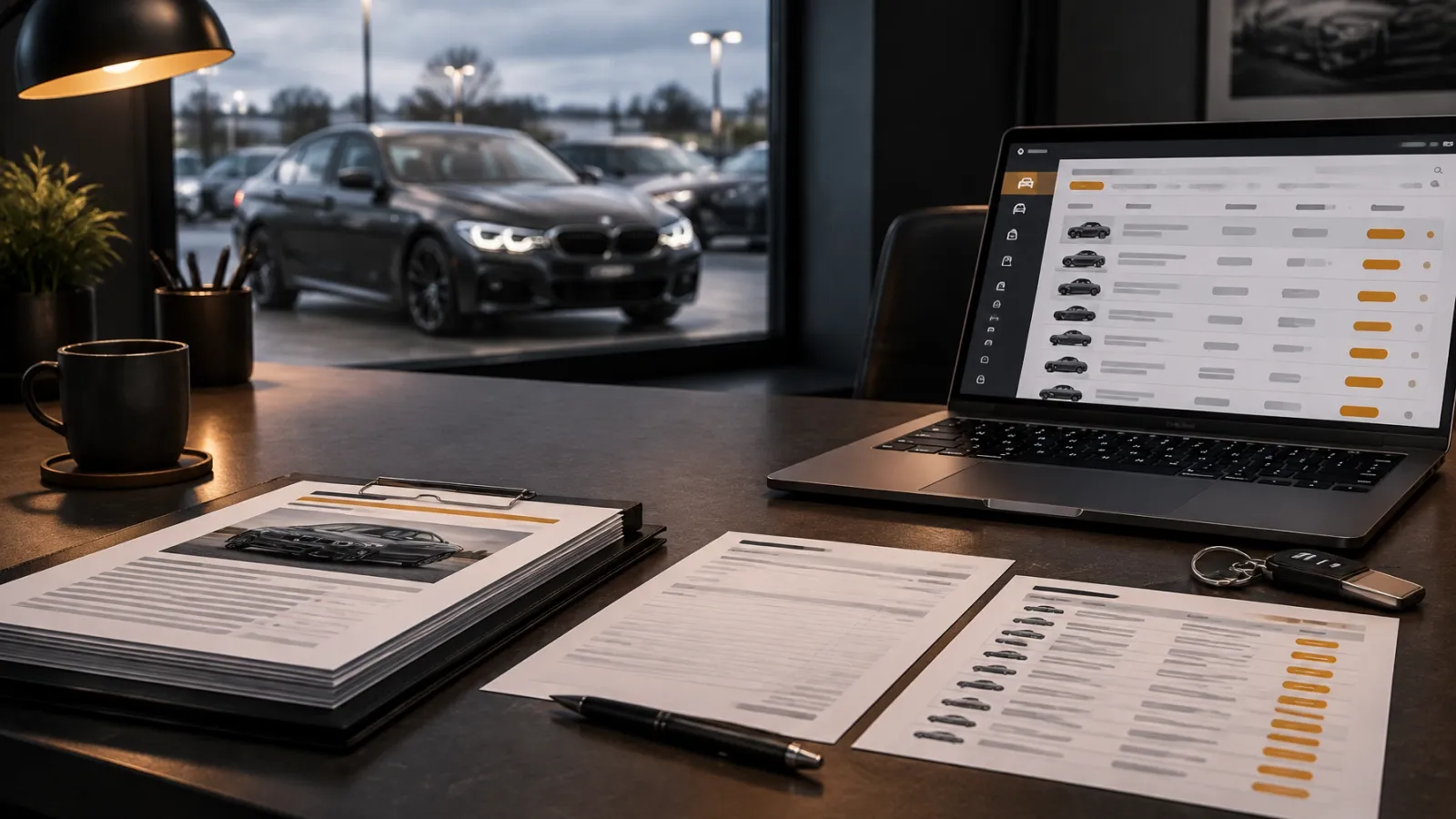
That matters whether you hold a handful of cars or turn stock over quickly. When photography is treated as a repeatable job in your car dealer inventory management routine, it is easier to see what is ready to go live, what still needs attention and which files belong to which car.
Why photos affect the work
A listing is often the first chance a buyer gets to inspect a car. Dark, cluttered or inconsistent photos can make it harder to judge its condition. A set taken in a rush, with important details missing, may also mean another trip outside to capture the dashboard, boot or a close-up of a mark.
There is another familiar problem: the car changes, but its photos do not. Perhaps the original pictures were taken in the rain before valeting, or before a repair. If the car now looks different in person, the listing feels out of date.
This is not about arranging a professional shoot for every vehicle. It is about having a small, reliable routine that gets the right images while the car is already being prepared.
Make photography one of the stock steps
A busy morning can leave little room for careful framing. The vehicle needs checking, cleaning, pricing and advertising, alongside the rest of the day’s work. Photos get taken quickly because they are one more task on the list.
Make the process easier by giving photography a clear place in the vehicle’s journey. For example:
- Vehicle arrives: create or update its stock record.
- Preparation is complete: check the car is clean and ready to present.
- Photos are taken: follow the same shot list for each vehicle.
- The set is checked: confirm images are sharp, complete and matched to the right car.
- The vehicle goes live: use those approved images for its advert and website listing.
That sequence is manageable for a small team, and it gives a larger forecourt a consistent standard to follow. The photos become part of the record, rather than a separate job to remember later.
Choose a spot and stick to it
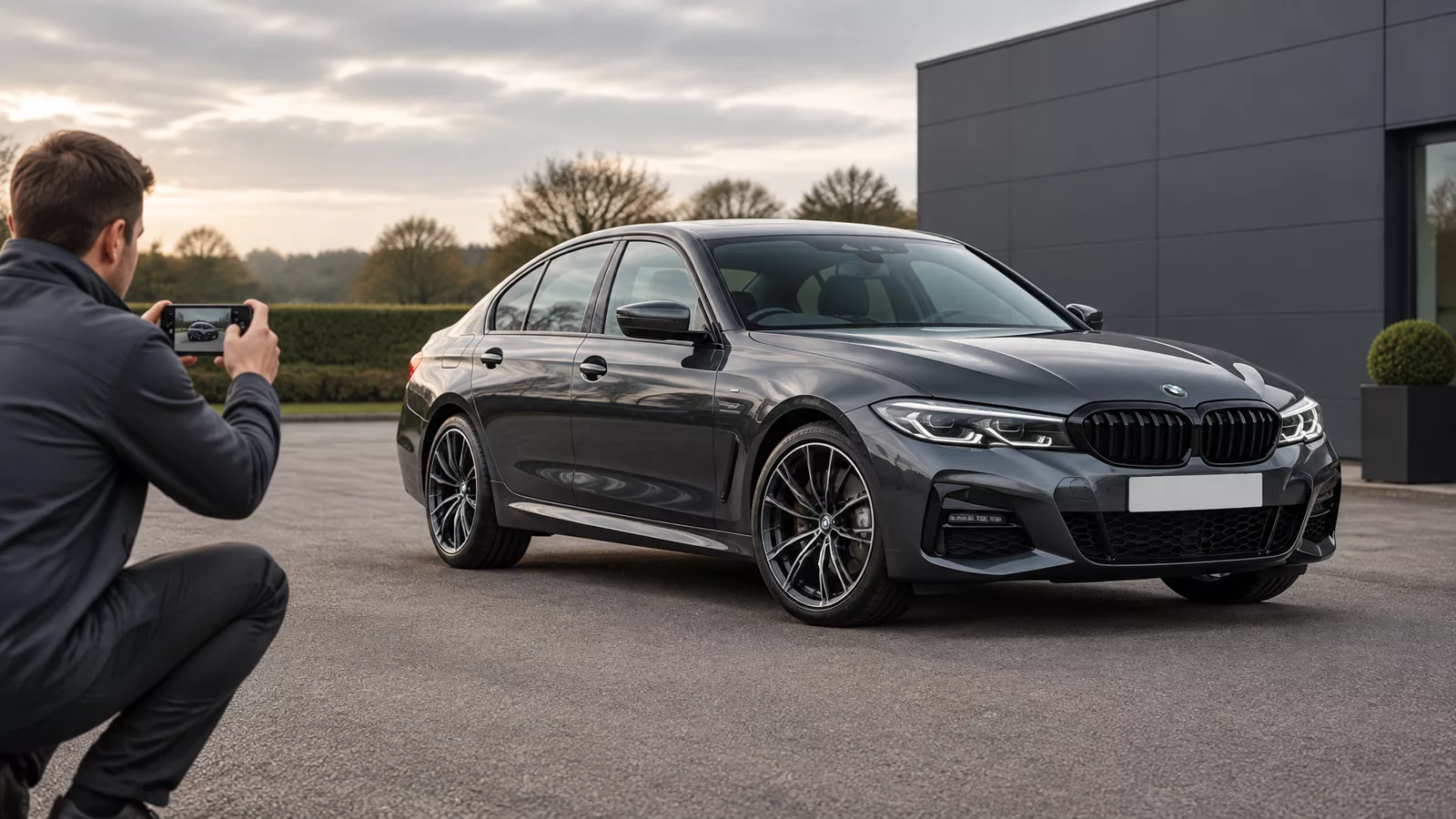
You do not need a studio. You do need a place where the car can be photographed without other vehicles, bins or workshop activity crowding the frame.
Choose a spot with a tidy, neutral background and enough room to walk around the car safely. If possible, use it at a similar time of day, when the light is reasonably even. Avoid strong glare, deep shadow and backgrounds that compete with the vehicle.
Keep a simple standard: where the car is parked, where you stand and how much space you leave around it. A consistent setting makes the stock gallery feel orderly and helps your team spot an image that is missing or out of place.
Use the same shot list each time
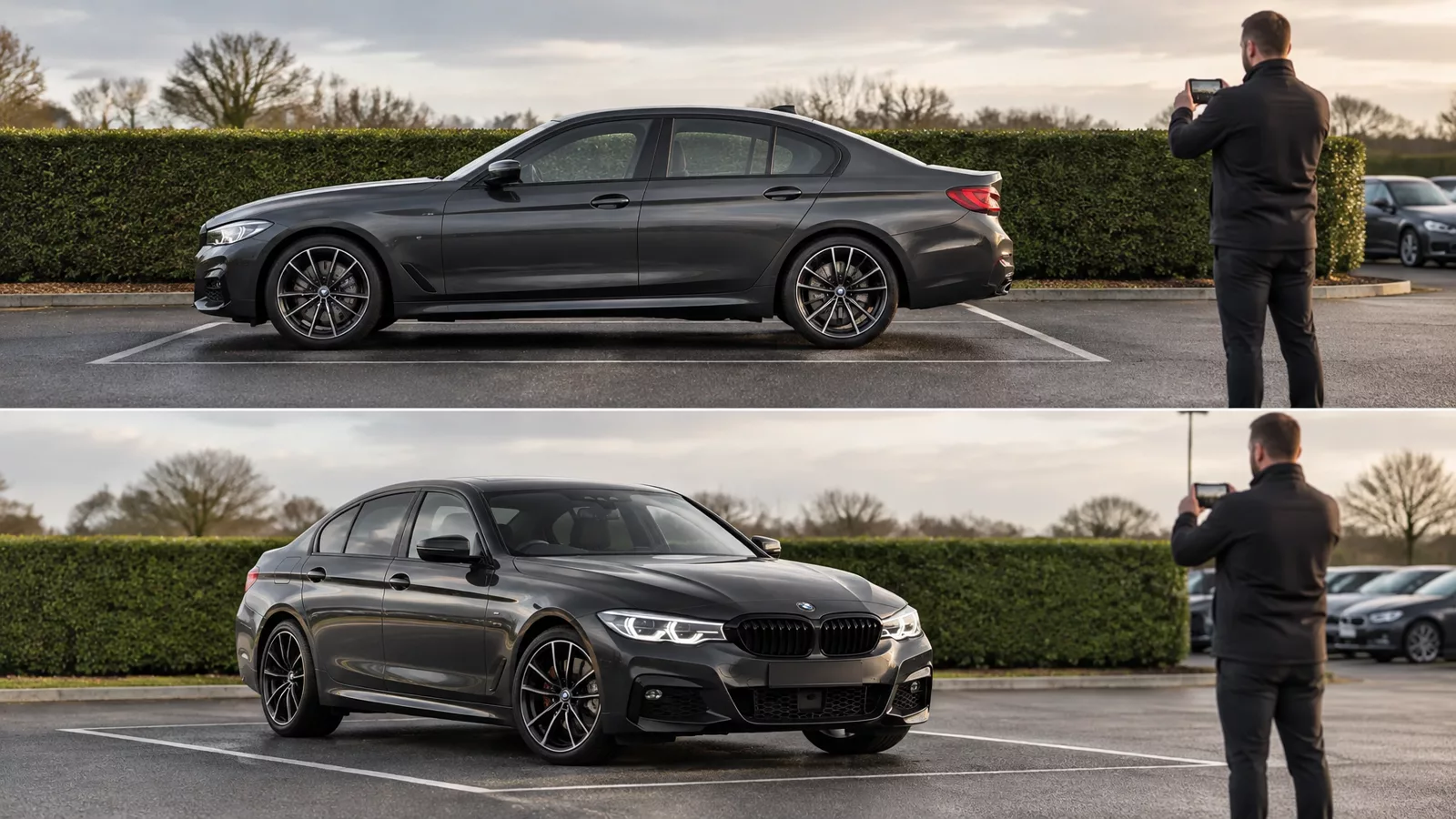
A complete set should let someone make a useful visual walk-around without asking you to fill obvious gaps. Use a checklist and keep the sequence consistent.
A practical starting point:
- Front three-quarter view
- Rear three-quarter view
- Both side profiles
- Front and rear seats
- Dashboard and centre console
- Instrument display showing the mileage
- Engine bay
- Boot or load area
- Wheels and tyres where condition is relevant
- Clear photos of any known marks or wear
Add any details that matter for the particular car, such as a convertible roof, unusual trim or a feature that is important to its specification. The aim is not to take every possible angle. It is to capture the car clearly and avoid leaving out useful evidence.
The Cox Automotive guide to telling a vehicle’s value story through photos discusses using a varied set of images to show more than one angle. For your own routine, decide what every car needs, then make that set the default.
Photograph marks honestly
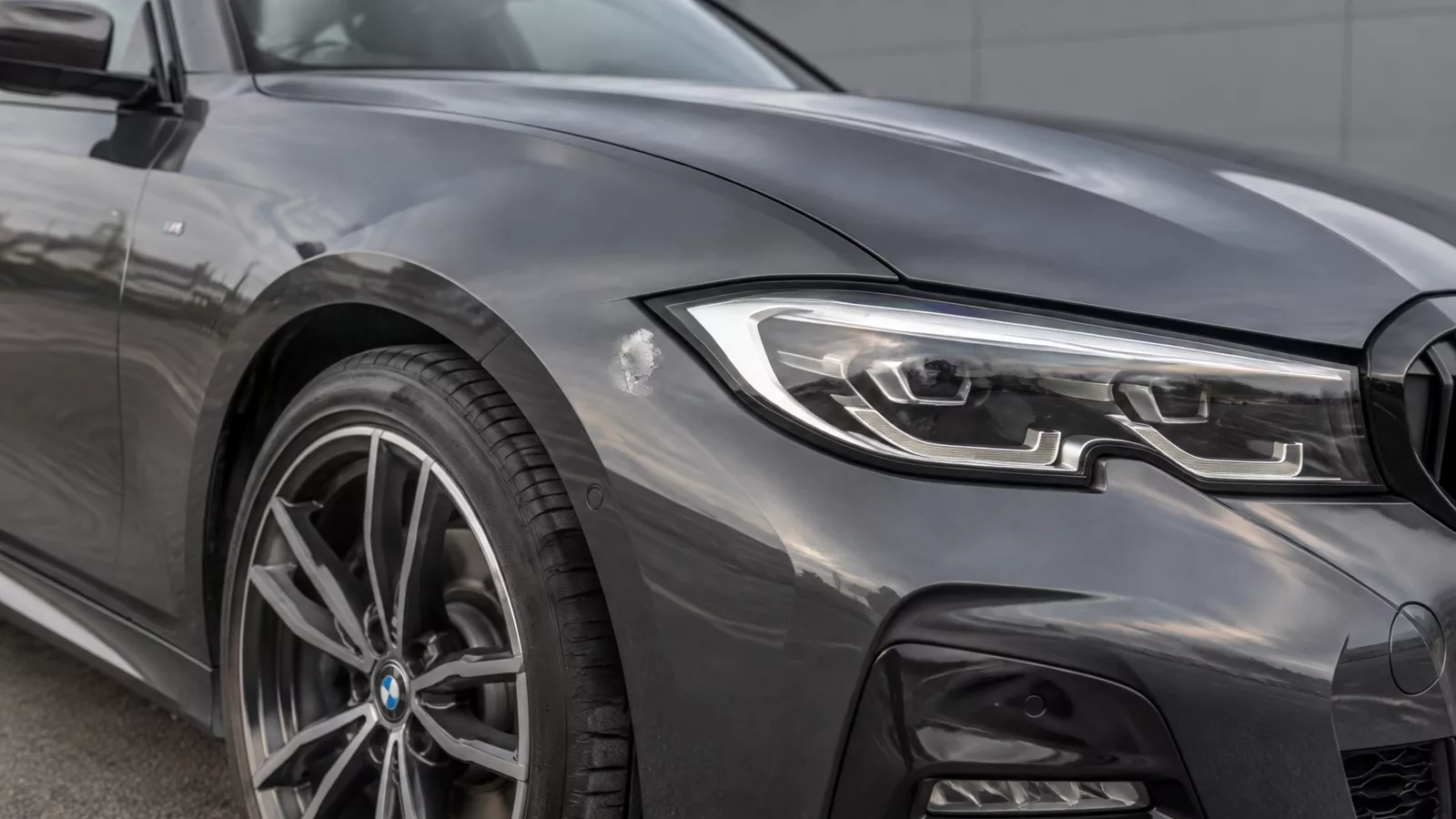
A photo set should show the car as it is. If there is a scuff, small dent, worn seat bolster or other notable mark, take a clear picture of it. Include one image that shows where the mark is, and another closer view if that helps explain its size or condition.
Do not rely on a general photo to represent a specific defect, and do not edit out damage. The WardsAuto article on documenting imperfections in used-car photos makes the case for showing blemishes as part of the vehicle’s presentation. It is a practical habit: the buyer can see the condition before arranging a visit, and your team has a visual record to refer back to.
A clear photo does not replace a written description. Note significant marks in the advert as well, and make sure the image set does not give a misleading impression of the car.
Keep the photos with the vehicle
Save the images against the correct vehicle record, rather than leaving them in a camera roll or a general folder. Name files consistently if you use local folders, and check the registration or stock number before uploading. It is a small safeguard against attaching one car’s photos to another car’s advert.
Keeping the set with the record also makes reuse straightforward. The same approved files can support the car’s website page and the stock feeds you use, instead of being uploaded or recreated separately. Barton's Bespoke’s stock feeds describe how vehicle photos, descriptions and prices can be carried from the back office into website and portal feeds.
The principle is useful whatever system you use: one set of files, stored in the right place, ready for the next publishing step.
Know when to re-shoot
Photos do not need to be replaced just because a new week has started. Re-shoot when the pictures no longer represent the car or its presentation.
Good reasons include:
- The car has been valeted since the first shoot.
- A repair has changed its appearance.
- A previous set is dark, blurry, incomplete or poorly framed.
- A condition detail was missed or has changed.
- The vehicle’s current photos do not match what a buyer will see on arrival.
If the advert is not getting the attention you expected, check the photos as part of a wider review. A fresh, clearer set may be worthwhile if the existing images are weak or no longer accurate. The point here is not to turn every quiet listing into a marketing project; it is to keep the vehicle record accurate and usable.
A quick check before publishing
Before the car goes live, ask:
- Is this the right vehicle and the right photo set?
- Is the full standard sequence present?
- Are the images clear and reasonably consistent?
- Can a buyer see the interior, mileage, boot and engine bay?
- Are known marks shown honestly?
- Does the set reflect the car as it looks now?
For a small forecourt, this can be a short checklist on the job sheet. For a higher-turnover site, assign someone to check completeness before publication. Either way, a quick review can prevent missing images from becoming a second photography job later.
One routine, fewer repeat visits
Good stock photography does not depend on having more time. It depends on making the task repeatable: choose a spot, follow the same shot list, attach the images to the right vehicle and re-shoot only when something has changed.
If you are reviewing how vehicle records, website pages and stock feeds fit together, take a look at our page on car dealer websites. You can explore the details at your own pace and see whether a connected workflow suits your forecourt.
The pictures in this guide are illustrations, except where a caption says otherwise.